Are Roses Toxic to Cats? What Pet Owners in the U.S. Need to Know Right Now. If you’re a cat owner who loves fresh flowers, you’ve probably wondered whether that beautiful bouquet on your dining table could harm your furry friend. With more Americans bringing floral arrangements into their homes—especially roses—pet safety concerns are trending across social media and veterinary forums. The question “are roses toxic to cats?” has sparked thousands of searches from worried pet parents who want to keep their homes both beautiful and safe.
Understanding which plants pose risks to cats isn’t just about avoiding emergencies. It’s about creating a living space where your pets can explore safely while you enjoy the things you love. Let’s break down everything you need to know about roses and cat safety.
Why Rose Safety for Cats Is Gaining Attention in the U.S.
The conversation around roses and pet safety has grown significantly over the past few years. Several factors are driving this increased awareness.
Suggested read: What's Behind the Rising Interest in Bengal Cat Price Across the US?
First, more Americans are adopting cats than ever before. The pandemic pet boom brought millions of new feline companions into U.S. homes, and many first-time cat owners are learning about pet-proofing their spaces.
Second, social media has amplified awareness about toxic plants. Videos of cats nibbling on houseplants rack up millions of views, prompting owners to research which greenery is safe and which isn’t.
Finally, the rise of flower delivery services and subscription boxes means fresh florals are more accessible. With roses being the most popular cut flower in America, the overlap between rose lovers and cat owners is substantial.
How Rose Toxicity Actually Works: The Real Answer
Here’s the good news: true roses (genus Rosa) are generally considered non-toxic to cats according to the ASPCA and major veterinary resources.
Suggested read: Tips for Bathing Your Cat: A Comprehensive Guide
This means the classic garden roses, tea roses, floribunda roses, and most commercial cut roses won’t poison your cat if they take a nibble. The petals, leaves, and stems of genuine roses don’t contain compounds that are systemically toxic to feline biology.
However, there are important nuances to understand.
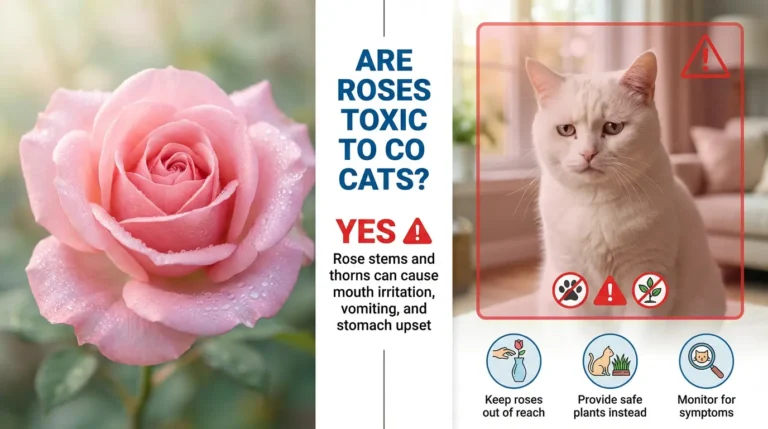
While roses themselves aren’t poisonous, they can still cause problems. The thorns can injure a cat’s mouth, throat, or digestive tract if swallowed. Some cats may experience mild stomach upset, vomiting, or diarrhea from eating plant material their digestive systems aren’t designed to process.
Suggested read: Sunrise Pet Clinic Vets
Additionally, what comes with roses can be problematic. Pesticides, fertilizers, and preservatives used on commercial flowers may contain chemicals that are harmful to cats. The water in flower vases often contains floral preservatives that shouldn’t be consumed by pets.
Common Questions People Have About Roses and Cats
Can cats eat rose petals safely?
While rose petals aren’t toxic, they’re not meant to be cat food. A curious nibble usually won’t cause serious harm, but eating significant amounts could lead to digestive upset. Monitor your cat and contact your vet if you notice unusual behavior.
Are all types of roses safe for cats?
True roses from the Rosa family are generally safe. However, some plants with “rose” in their common name aren’t actually roses. Desert rose, Christmas rose, and primrose are different species that can be toxic to cats. Always verify the botanical name.
What about rose thorns?
Thorns present a physical hazard rather than a toxicity concern. They can scratch or puncture the mouth, paws, or digestive tract. Keep roses out of reach to prevent injuries.
Suggested read: Mickey Mouse Clubhouse Pete's Beach Blanket Luau Youtube
Is the water in rose vases dangerous for cats?
Yes, potentially. Floral preservatives contain ingredients that may be harmful if ingested in large quantities. Cats attracted to fresh water might drink from vases, so it’s best to keep them inaccessible.
Opportunities and Considerations for Cat-Friendly Homes
Understanding rose safety opens up opportunities for cat owners who love flowers.
You can enjoy fresh roses in your home without major safety concerns, as long as you take basic precautions. Place arrangements in areas your cat can’t easily access. Choose organic or pesticide-free roses when possible. Empty and clean vases regularly to prevent bacterial growth that could sicken both you and your pet.
The considerations are equally important. Even non-toxic plants can cause issues when consumed in quantity. Some cats are more curious or plant-obsessed than others. Young kittens and certain breeds may be more likely to chew on plants.
Suggested read: How Much Is Urgent Care For Dogs
If your cat shows persistent interest in eating plants, consider providing cat grass or other safe alternatives to satisfy their grazing instinct.
Budget-conscious pet owners should note that emergency vet visits for plant ingestion can be expensive, even when the plant itself isn’t toxic. Prevention remains the most cost-effective approach.
Things People Often Misunderstand
One common misconception is that all flowers are either completely safe or deadly toxic. The reality is more nuanced. Many plants, including roses, fall into a middle category where they’re not poisonous but can still cause mild problems.
Suggested read: Patio Pet Doors For Sliding Doors
Another myth is that cats instinctively know what’s safe to eat. While cats are generally cautious eaters compared to dogs, they don’t have perfect judgment about plants. Boredom, curiosity, or nutritional deficiencies can lead cats to chew on things they shouldn’t.
Some people believe that if one plant in a family is safe, all similar-looking plants are too. This is dangerous thinking. Always verify the specific species, not just the common name.
There’s also confusion about the difference between “toxic” and “problematic.” A plant can be non-toxic but still cause vomiting, diarrhea, or physical injury. When people search “are roses toxic to cats,” they’re usually asking whether roses will make their cat sick—and the answer depends on multiple factors beyond simple toxicity.
Who Rose Safety Information May Be Relevant For
This information matters for several groups of people.
Suggested read: National Dress Up Your Pet Day Meme
New cat owners navigating pet-proofing for the first time need reliable guidance about common household items. Experienced cat parents who are introducing flowers into their homes for special occasions want quick safety checks.
People who receive roses as gifts and have cats need to know whether to keep the bouquet or pass it along. Gardeners with outdoor cats should understand the difference between garden roses and other plants that might share space in flowerbeds.
Florists and flower delivery services increasingly field questions about pet safety, making this knowledge professionally relevant. Veterinary professionals answer these questions regularly and appreciate when clients do their research.
Suggested read: What Is The Best Carpet Cleaner Solution For Pet Urine
Anyone redesigning their living space to be more pet-friendly can make informed choices about decorative plants.
Stay Informed About Your Cat’s Safety
The best approach to keeping your cat safe around roses and other plants is to stay curious and proactive. Bookmark reliable resources like the ASPCA’s toxic plant database. When bringing new plants home, take a moment to verify their safety.
Consider photographing any plants you’re uncertain about and sharing them with your veterinarian. Most vet offices are happy to help identify potential hazards during regular checkups.
Keep your vet’s contact information and the Pet Poison Helpline number easily accessible. While roses are generally safe, quick access to professional advice provides peace of mind for any plant-related concerns.
Suggested read: Westgate Pet Clinic Vets
Conclusion
Roses and cats can peacefully coexist in American homes with basic awareness and precautions. True roses aren’t toxic to cats, though they’re not meant to be eaten and can cause minor issues if consumed in quantity or if thorns cause injury.
The key is understanding that “non-toxic” doesn’t mean “perfectly safe to eat.” By keeping roses in secure locations, choosing clean sources, and watching your cat’s behavior, you can enjoy beautiful flowers without worry.
Your home can be both elegant and pet-safe. With the right information, you don’t have to choose between the things you love and the safety of your feline companion.