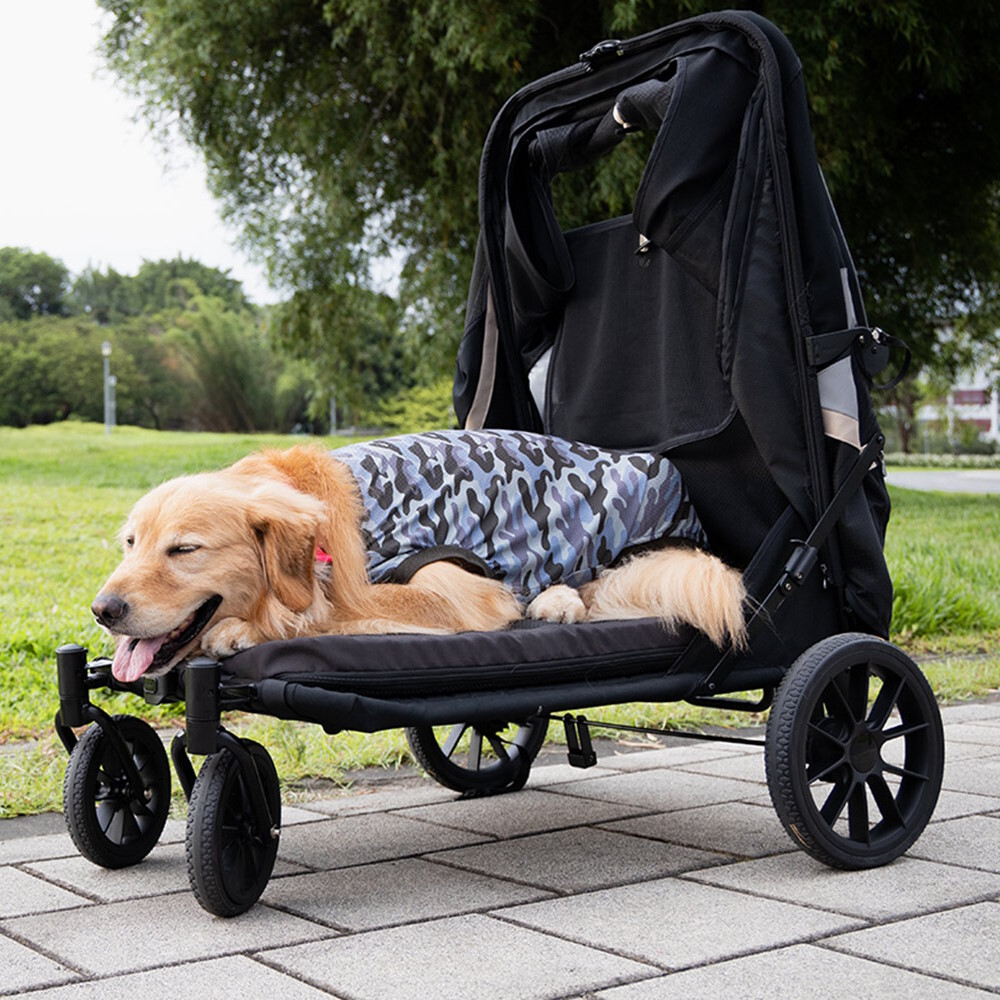
For many dog owners, daily walks are more than just exercise—they are a shared ritual of exploration, bonding, and fresh air. But when a dog develops mobility issues, whether from old age, hip dysplasia, arthritis, intervertebral disc disease, or recovery after surgery, those familiar walks become difficult. A dog stroller for dogs with mobility issues offers a compassionate solution that allows your canine companion to continue enjoying the outdoors without the pain or risk of overexertion. Far from being a luxury gadget, a good stroller is a practical mobility aid that can dramatically improve your dog’s quality of life while giving you peace of mind. This guide will walk you through the essential features, compare different stroller types, and help you choose the right one for your furry friend.
Why a Dog Stroller Can Help Dogs with Mobility Issues
It is natural to hesitate at first—you might wonder if using a stroller means giving up on your dog’s ability to walk. In reality, it means the opposite. A stroller is not an alternative to walking; it is a supplement to it. Many dogs with chronic conditions like arthritis or dysplasia still benefit from short, controlled ambulation to maintain muscle mass and joint flexibility. But their walking time is limited, often to just a few minutes. The problem is that they still want to smell the park, watch the squirrels, and be part of the world. A stroller bridges that gap.
For dogs with severe conditions, such as rear limb paralysis or significant post-operative recovery, a stroller provides the only safe way to get them outdoors. It reduces the risk of falls, prevents the dog from overusing failing joints, and keeps them calm during veterinary-mandated rest periods. Moreover, the mental enrichment of being outside—feeling the breeze, hearing new sounds, and seeing familiar routes—is invaluable for a dog that might otherwise be confined indoors. Using a stroller for the bulk of the journey while allowing short periods of on-ground walking under your supervision is often the best compromise. It allows your dog to feel active without the harmful consequences of walking until they collapse from fatigue.
Key Features to Look for in a Mobility Stroller
Not all strollers are created equal, and the differences matter significantly when your dog’s comfort and safety are on the line. Before you make a purchase, consider the following essential features, which directly address the needs of a mobility-impaired dog.
- Weight Capacity and Frame Strength: Always check the manufacturer’s maximum weight limit and then add a couple of kilograms for safety. A flimsy frame will wobble and tire under the load. Look for a sturdy steel or high-grade aluminum frame that can handle your dog’s weight without sagging. Heavier, robust frames are better for older dogs who may shift their weight unexpectedly.
- Easy Access and Entry Height: The most critical feature for a dog with bad hips or weak legs is how they get in and out. Look for a stroller with a low step-over threshold or an open top that allows you to lift your dog in gently. Some models have a zippered front flap that folds down completely to create a ramp-like opening, while others have a wide side door. Avoid strollers with high plastic lips; your dog should not have to jump or climb to enter.
- All-Terrain Wheels and Suspension: If you intend to navigate uneven sidewalks, grass, or gravel paths, choose strollers with inflated air tires or large foam-filled wheels. These absorb shocks and roll much more easily over obstacles than small plastic wheels. A good suspension system on the rear wheels is vital to reduce jarring movements that could aggravate a sore back or sensitive joints.
- Interior Comfort and Support: A padded base is non-negotiable. Some strollers offer quilted interior liners or extra head support. For dogs with orthopedic issues, you might consider adding a thin dog bed or memory foam pad inside, but ensure it does not elevate them so high that their head hits the canopy or they feel insecure. The interior should be easy to clean—look for machine-washable inserts.
- Safety Restraint System: A simple tether clip is not enough. Look for a stroller with a built-in leash or a padded harness attachment point, ideally anchored low to the floor of the stroller. This prevents a dog from leaping out unexpectedly and secures them even if the stroller tips. Also, ensure the front and rear brakes are reliable and lockable.
- Handlebar Adjustability and Storage: For your own comfort, find an adjustable push handle that suits your height. A stroller that makes you hunch or stretch will soon tire you out. A handy storage basket underneath is useful for carrying water, a first-aid kit, or a towel.
Comparing Common Stroller Styles for Special Needs Dogs
Once you understand the features, the next step is to decide which style of stroller fits your lifestyle and your dog’s specific limitations. The table below outlines the most popular categories and their trade-offs.
| Stroller Type | Best For | Pros | Cons |
|---|---|---|---|
| Standard / Lightweight | Toy and small breeds with mild arthritis or general fatigue on long walks. | Easily foldable, lighter to carry, typically more affordable, good for quick errands. | Small wheels struggle on rough terrain; less cushioning; lower weight limits (usually under 15 kg). |
| All-Terrain / Jogging | Medium to large dogs with significant mobility limitations who still want to enjoy parks and trails. | Large air-filled tires, excellent suspension, higher weight capacity, more stable on uneven ground. | Bulkier and heavier to store, requires more physical effort to push, often more expensive. |
| Tri-Wheeler | Urban environments with sharp turns and narrow sidewalks. | Excellent maneuverability, lighter weight, easier to steer one-handed while holding another leash. | Less stable on steep slopes or rough ground; may tip if the dog moves suddenly to one side. |
| Multi-Dog / Double | Households with two dogs where one is able-bodied and one has mobility issues, or two senior dogs. | Allows both dogs to ride together, preventing jealousy, shared conditioning for long trips. | Very heavy, wide footprint, requires significant storage space, higher cost. |
Your choice will ultimately depend on your dog’s size, the typical terrain in your neighborhood, and your storage space. For a small apartment dog, a compact lightweight stroller may be sufficient. For a Labrador with hip dysplasia who still loves the forest, an all-terrain model is worth the investment.
How to Introduce Your Dog to a Stroller Without Stress
Many dogs are naturally suspicious of a wheeled contraption, especially if they are already feeling vulnerable due to pain or weakness. Forcing them into a stroller will cause anxiety and possibly lead to a lasting aversion. Instead, use gradual desensitization over several days. Begin by bringing the stroller into the house and simply letting your dog inspect it. Open all the flaps and doors, and leave treats and their favorite blanket inside. Give them plenty of praise when they sniff or look inside. Do not close them in on the first day.
Next, try placing a high-value treat (like a small piece of chicken) on the floor of the stroller. When your dog steps inside to get it, praise them and let them back out immediately. Repeat this several times until the stroller feels like a safe feeding station. Once they are comfortable stepping in voluntarily, practice closing the front flap for just a few seconds and then opening it. Gradually increase the time. Move on to a short indoor push, such as from the kitchen to the living room. Watch for signs of stress like panting, yawning, or pinned ears. If they appear anxious, step back to the previous stage and move more slowly.
When you finally head outdoors, choose a quiet time of day and a smooth, flat route. Walk slowly and talk to your dog in a cheerful tone. Do not go on a long trip. Instead, do a 10-minute loop around the block and then give them a snack at home. Your goal is to build a positive association: stroller equals outings, which equal treats, and separate home where they can rest. For dogs that are physically able, allow them to ride for part of the walk and walk on-leash for a short distance on the way back. This keeps their muscles engaged without causing fatigue. Over time, most dogs will learn to wait by the stroller eagerly, knowing it leads to adventures.
Suggested read: How to Choose the Best Pet Accessories Shop for Your Furry Friend
Everyday Practical Tips for Using a Stroller with a Mobility-Impaired Dog
Using a stroller well is about more than just strapping your dog in. It requires a bit of planning to ensure the experience is comfortable for both of you. Here are practical tips gleaned from everyday use with senior and special-needs dogs.
Use the stroller for partial rides. If your dog can still walk, do not use the stroller exclusively. Let them walk for a few minutes at the beginning of the walk while they are fresh, then have them ride for the rest. Many owners find that their dogs will signal when they are tired by sitting down or slowing down. When they climb into the stroller on their own, that is a clear message that they are done walking for the day.
Plan for weather extremes. Dogs with mobility issues often have trouble regulating body temperature because they cannot move to find shade or adjust posture. On warm days, use the stroller’s canopy and consider adding a damp, cool towel over the back. In winter, line the stroller with a fleece blanket. Also, note that dogs in strollers are closer to the hot pavement, so on very hot days, it is better to use the stroller to get to a shaded park than to push them along on sun-baked sidewalks.
Keep a ’emergency kit’ in the storage basket. Pack a collapsible water bowl, a small bottle of water, a roll of poop bags, a towel, and a first-aid kit. This way, you are never caught off guard. An extra layer for yourself is also wise, especially on cooler mornings.
Perform regular maintenance. Check the wheels for hair and debris, lubricate the axles occasionally, and verify that the brake still functions well. After a walk, wipe down the wheels to avoid tracking mud or allergens into the house. The fabric will also accumulate dog hair and odors, so remove the liner weekly and wash it according to the manufacturer’s instructions. Do not use harsh chemicals inside the stroller as they may irritate your dog’s skin.
Be aware of your surroundings. When pushing a stroller, you occupy more space than when walking a dog on a leash. Be mindful of cyclists, pedestrians, and other dogs. Many strollers have a small flag or bright color, but you should still use caution at curb ramps. Push the stroller slowly over any bumps or steps to minimize jolts to your dog’s spine.
Finally, remember that a stroller is not a substitute for veterinary care. If a dog’s mobility issue is sudden, or if they show signs of pain even when riding, consult your vet. The stroller is a tool to improve their environment, but it does not treat the underlying condition. By pairing veterinary advice with a well-chosen stroller, you can give your dog the gift of continued outward participation in life, regardless of their physical limitations. With patience and a thoughtful approach, you will both enjoy many more miles together.