Sharing your home with a dog, cat, or other furry companion is one of life’s great pleasures, but it also comes with a less pleasant side effect: the air you breathe is often filled with pet dander, loose hair, and lingering odors. Even in a well-kept home, these particles and smells can settle into furniture, carpets, and fabrics, and they circulate through the air every time your pet shakes, sheds, or stretches out on the sofa. A quality pet air filter can capture much of what vacuuming and dusting leave behind. This guide explains how pet filters work, what to look for when buying one, and how to get the best results once it’s running.
Why Pet Dander, Hair, and Odors Linger in Your Home
Pet dander consists of tiny flakes of skin that animals shed naturally. These flakes are so small that they can remain airborne for long periods, and they carry proteins that are the most common triggers for pet allergies. Because dander is microscopic, it easily bypasses ordinary cleaning and drifts from room to room on air currents.
Hair and fur are larger and less allergenic on their own, but they act like carriers. Loose hairs collect dander, saliva, and dust, then transfer those particles to your sofa, bedding, and car seats. When hair breaks down or gets disturbed, the attached allergens become airborne again.
Odors are a third challenge. Smells from litter boxes, wet fur, accidents, and general “pet smell” come from airborne molecules that absorb into soft surfaces. Opening a window helps temporarily, but in many homes—apartments, homes with limited ventilation, or during extreme weather—venting isn’t always practical. This is where a dedicated pet filter earns its place: it continuously pulls airborne particles and odor molecules out of the air instead of letting them settle.
Which Filter Types Actually Work for Pets
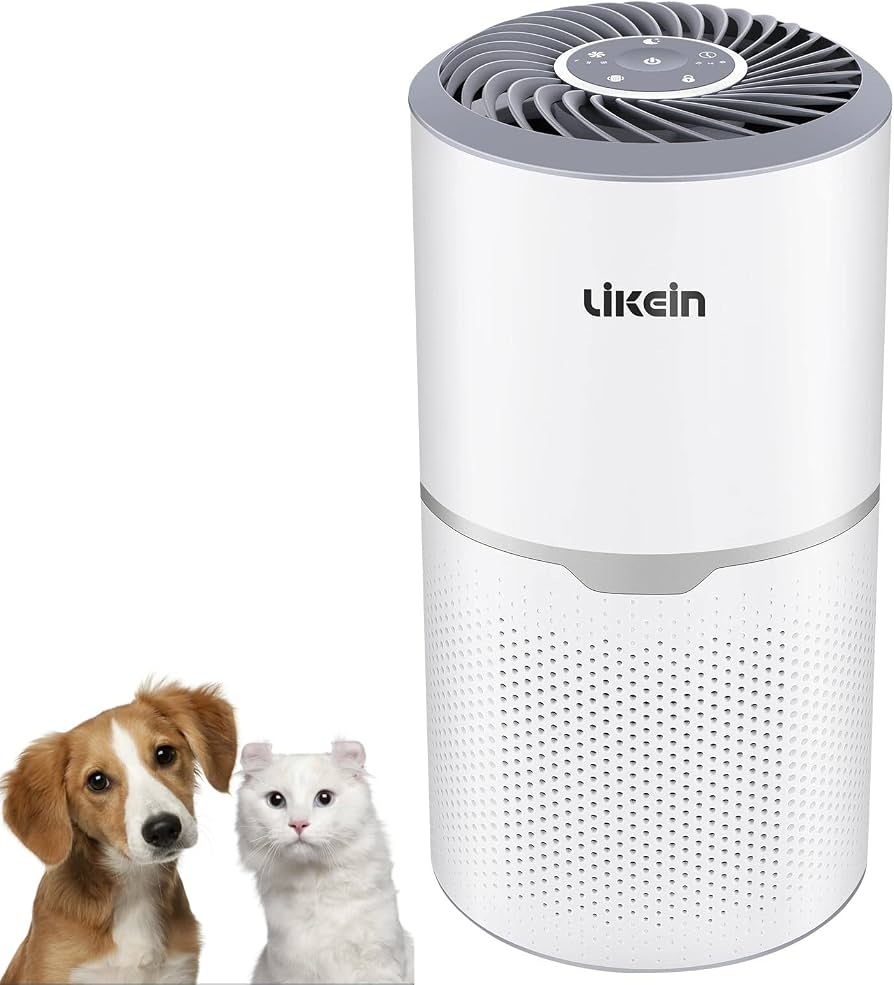
Not all air purifiers are equally suited to pet households, and the difference comes down to the types of filters inside the unit. Understanding each filter’s job helps you choose a machine that addresses dander, hair, and odors together rather than just one of the three.
- True HEPA filter: True HEPA filters are rated to capture at least 99.97 percent of airborne particles down to 0.3 microns in size, which includes pet dander and much of the fine dust that settles from fur. This is the most important filter for allergy sufferers.
- Pre-filter: A washable or replaceable mesh layer that catches hair, fur clumps, and larger debris before they reach the HEPA filter. Pre-filters protect the more expensive filter underneath and extend its life—a real advantage in multi-pet homes.
- Activated carbon filter: Porous carbon adsorbs odor molecules rather than just trapping particles. This is what tackles litter box smell, wet dog odor, and general mustiness. Filters with a substantial carbon bed handle stronger smells far better than thin carbon-coated sheets.
- Ionizers and UV add-ons: These are optional extras. Be cautious with any device marketed as an “ozone generator” or one that produces noticeable ozone, since ozone can irritate the lungs of both people and pets. If you consider a unit with an ionizer, look for one that can be switched off and that meets recognized safety and performance certifications.
The table below summarizes how each filter type fits into a pet-focused setup.
| Filter Type | Primarily Targets | Best For | Typical Maintenance |
|---|---|---|---|
| Pre-filter (mesh) | Hair, fur, larger dust | Shedding season and multi-pet homes | Vacuum or rinse every few weeks |
| True HEPA | Dander, fine dust, pollen | Allergy and asthma sufferers | Replace per manufacturer schedule; do not wash standard HEPA |
| Activated carbon | Odors, some gases and VOCs | Litter boxes, wet dog smell, accidents | Replace periodically; thick carbon beds last longer |
| Ionizer / UV (optional) | Varies by design | Situational; never required | Check for ozone output and safety certifications before use |
How to Choose the Right Pet Filter for Your Space
Once you know which filter types to look for, the next step is matching a unit to your home. Start with room size. Manufacturers list a recommended coverage area for each purifier; choose one rated for the room where it will live, and when in doubt, size up. A purifier running in a room that’s too large will work constantly without meaningfully improving air quality.
Pay attention to the Clean Air Delivery Rate (CADR), a measure of how quickly a purifier can filter the air in a given space. Higher CADR numbers generally mean faster cleaning for both dust and particles like dander. Many reputable models display AHAM (Association of Home Appliance Manufacturers) certification details, which makes comparing units easier.
Consider these practical features as well:
Suggested read: How to Choose the Best Pet Accessories Shop for Your Furry Friend
- Noise level: You’ll want to run the unit often, so check the decibel rating on low and high settings, especially for bedrooms.
- Filter replacement cost: A cheap purifier with expensive proprietary filters can cost more over time than a pricier unit with affordable replacements.
- Auto mode and air quality sensors: These adjust fan speed when sensors detect more particles—useful right after grooming sessions or when the litter box gets a lot of traffic.
- Multiple smaller units vs. one large one: If pets roam the whole house, several appropriately sized purifiers often outperform a single machine in one room.
Where to Place Your Pet Air Filter for Best Results
Placement affects performance more than most people expect. A well-chosen purifier in the wrong spot will underperform no matter how good its specs are. Use these placement tips:
- Put the unit in the room where your pets spend the most time—usually the living room or wherever they sleep.
- Near a litter box, position the purifier close enough to capture drifting particles but with enough clearance for air to flow freely into the intake.
- Keep several inches to a foot of open space around the unit so air can circulate through it freely; crowding it against a wall or behind furniture chokes airflow.
- Run the purifier continuously on a low or medium setting rather than in short bursts. Air filtration works cumulatively.
- Close windows and doors in the room while the unit runs so it isn’t trying to filter outdoor air at the same time.
- Avoid placing the purifier directly against curtains or bedding that could block intake vents.
Keeping Your Pet Filter Performing at Its Best
Pet hair is hard on air purifiers, and maintenance matters more in a pet home than almost anywhere else. A clogged pre-filter reduces airflow, forcing the fan to work harder and cleaning less air in the process. Check the pre-filter every couple of weeks—more often during heavy shedding seasons—and vacuum it or rinse it according to the manufacturer’s instructions.
Replace HEPA and carbon filters on the schedule the manufacturer recommends, and expect to replace them sooner if you have multiple pets or noticeable odor. Don’t attempt to wash a standard HEPA filter unless the manufacturer explicitly says it’s washable; wetting a non-washable HEPA media ruins its structure. If your unit has an air quality sensor, wipe the sensor opening occasionally, since dust and dander buildup can cause inaccurate readings and erratic auto-mode behavior.
Simple Habits That Help Your Pet Filter Work Better
An air purifier handles what’s floating in the air, but a few companion habits reduce the overall load and keep your home noticeably fresher:
- Brush your pets regularly—outdoors or in an easy-to-clean spot—to remove loose fur before it circulates.
- Bathe pets at a frequency appropriate for their breed and skin, as your veterinarian recommends, to reduce dander and odor at the source.
- Wash pet bedding, blankets, and washable covers weekly in hot water.
- Vacuum floors and upholstery with a vacuum that has a sealed HEPA filtration system so captured dander isn’t exhausted back into the room.
- Scoop litter boxes daily and fully change litter on a regular schedule.
- Clean accidents promptly with an enzymatic cleaner, which breaks down odor-causing compounds rather than masking them.
- Mop hard floors and wipe surfaces where fine dander settles.
Frequently Asked Questions About Pet Air Filters
Do air purifiers actually help with pet allergies?
Yes, when equipped with a true HEPA filter, they can meaningfully reduce airborne dander, which is a primary allergen trigger. That said, purifiers can’t remove allergens that have already settled into carpets and furniture, so they work best alongside regular cleaning.
Do I need a purifier labeled “for pets,” or will any HEPA unit work?
Any true HEPA purifier will capture dander. What “pet” models typically add is a more robust pre-filter for hair and a larger activated carbon bed for odors—both worthwhile if smells and shedding are concerns.
How long before I notice a difference?
Odor reduction is often noticeable within hours to a couple of days, depending on room size and how long the unit runs. Allergy symptoms may improve gradually over days or weeks as airborne particle levels drop.
Should the purifier run all day?
Continuous operation on a low or medium setting is generally the most effective approach. Filtration is cumulative, and pet dander is constantly being reintroduced into the air.
The Bottom Line
The best pet air filter for your home combines a true HEPA filter for dander, a sturdy pre-filter for hair, and a meaningful amount of activated carbon for odors, all sized appropriately for your room and priced sensibly to maintain. Pair it with smart placement, consistent filter care, and a few good grooming and cleaning habits, and you’ll get the best of both worlds: the companionship of your pets and cleaner, fresher air throughout your home.