In this guide
Keeping a bird clean is a basic part of indoor care, but a cage bath is not simply a bowl of water. The right setup depends on the species, the size of the cage, how the bird prefers to bathe, and how much mess you are willing to manage. This guide walks through the accessories that make bathing safer and more practical in an indoor cage, along with what to check before buying.
Product designs and availability change frequently, so treat specific brand recommendations as examples of categories rather than fixed buying advice. Always confirm current dimensions, materials, and manufacturer instructions before purchase.
Types of Bird Bath Accessories for Indoor Cages
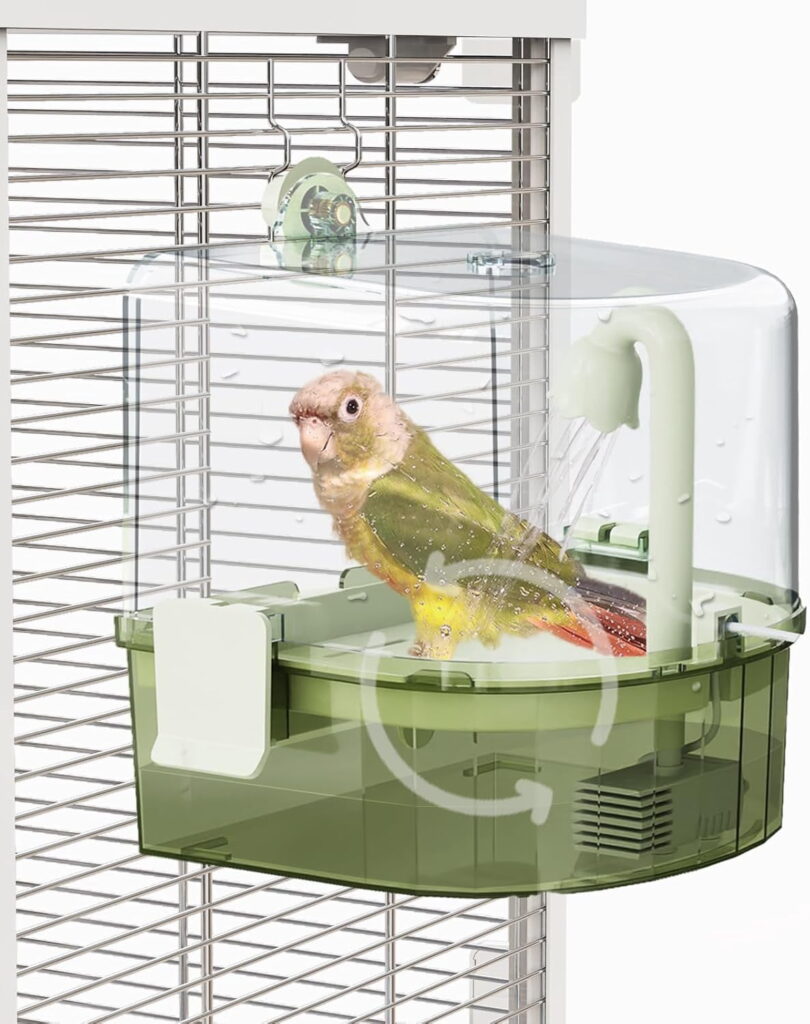
Bathing accessories generally fall into a few categories, and many birds do best with more than one option available over time. The most common are clip-on or hanging baths, which attach to cage bars and can be removed for cleaning; freestanding baths that sit on the cage floor or a shelf; and shallow dishes that serve as a simple bath or a backup water source. Some owners also use a small spray bottle or a gently running tap as an alternative for birds that dislike standing water, though that is a bathing method rather than a cage accessory.
Clip-on baths are popular in indoor cages because they save floor space and sit at a height the bird can reach easily. Look for models with wide, secure hooks and a lip that prevents tipping. Floor-standing baths tend to be larger and suit bigger birds or cages with flat bases, but they take up room and can be knocked over. Shallow ceramic or stainless steel dishes are the simplest option and are often easiest to sanitize.
Beyond the bath itself, useful accessories include splash guards or high-sided designs that reduce water spray, quick-release mounting hardware, and spare baths so one can be cleaned while another is in use. A small drying perch placed near but not directly over the bath can encourage birds to preen and dry off without soaking the cage floor.
What to Look For Before You Buy
Material safety comes first. Stainless steel, food-grade plastic, and glazed ceramic are common choices. Avoid accessories with chipped glaze, sharp edges, or strong odors, and check that any painted or coated surfaces are described as bird-safe by the manufacturer. If a product’s material information is vague, it is reasonable to look for a clearer alternative.
Size and depth matter more than many buyers expect. A bath should be shallow enough that a small bird can stand comfortably with its feet on the bottom, and wide enough that it can splash without feeling cramped. Deep, narrow containers can be risky for very small species. As a general rule, match the bath to the bird’s body size rather than to the cage size alone.
Mounting security is the next consideration. A bath that shifts or falls can frighten a bird and cause injury, so check hook thickness, locking mechanisms, and weight limits against your cage’s bar spacing. For floor-standing baths, a weighted base helps. Also consider how the accessory fits through the cage door, since a bath that cannot be removed easily will probably be cleaned less often.
Finally, think about cleaning. Removable parts, smooth surfaces, and designs without hidden crevices make routine washing much easier. Dishwasher-safe claims vary by product, so follow the manufacturer’s guidance rather than assuming.
Practical Comparison of Common Bath Setups
| Setup | Best suited to | Advantages | Watch-outs |
|---|---|---|---|
| Clip-on hanging bath | Small to medium birds in bar cages | Saves floor space; easy to remove and refill | Check hook security and bar spacing; splashing can reach cage walls |
| Floor-standing bath | Larger birds or cages with flat bases | Roomier; often more stable for bigger species | Takes up space; can be tipped or soiled with droppings |
| Shallow ceramic or steel dish | Most species; birds that prefer low-sided water | Simple, durable, easy to sanitize | No mounting; must be placed where it will not slide |
| Bath with splash guard | Enthusiastic splashers indoors | Reduces water on walls and flooring | Guard may limit headroom; check the bird can enter easily |
This table describes categories, not specific products. Designs within each category vary widely, so read current listings and reviews for details on size, material, and mounting.
Using Bath Accessories Safely and Hygienically
Offer water for bathing at a time when you can supervise, and remove the bath once the bird is finished. Standing water left in a cage can collect droppings, food debris, and dust, and in warm indoor conditions it can become a place where bacteria and mold develop. A routine of emptying, rinsing, and drying the bath after each use is more effective than occasional deep cleaning.
Water depth and temperature deserve attention. Lukewarm water is generally more comfortable than cold, and very hot water should be avoided. Some birds prefer a gentle mist or a shallow dish to a full bath, and forcing a bird to bathe is unnecessary. If a bird seems reluctant, offering a shallow dish or a light mist at a calm time of day is often more successful than changing equipment repeatedly.
Placement matters too. Position the bath away from food and water dishes to reduce contamination, and away from drafts, direct sun, and electrical items. Indoors, splashing is the main practical issue, so consider a bath with higher sides or place a washable mat beneath the cage area. Birds should always have access to clean drinking water separate from bath water.
Inspect accessories regularly for cracks, loose hooks, rust, or wear. Replace damaged items rather than repairing them with glues or coatings that may not be bird-safe. If a bird is injured, lethargic, or showing unusual behavior around bathing, consult an avian veterinarian rather than adjusting equipment alone.
Matching Accessories to Different Birds and Cages
Small species such as finches and canaries often do well with shallow, low-sided dishes or small clip-on baths. Budgies and cockatiels generally manage slightly deeper clip-on baths but still benefit from a textured bottom or a perch nearby for grip. Larger parrots may need sturdier, heavier baths, and some prefer a shower perch or a gentle spray rather than a bowl. These are general tendencies, not rules; individual birds vary considerably.
Cage design also shapes the choice. Bar spacing affects which hooks fit securely, and cage door size determines what can be removed easily. Cages with seed guards or deep bases may accommodate floor-standing baths better than open designs. If you keep multiple birds, consider whether one bath is enough or whether separate bathing opportunities reduce competition.
It is also worth keeping a spare bath or dish on hand. Having one clean and dry while another is washed simplifies routine care and reduces the temptation to skip cleaning. Where manufacturers provide care instructions, follow them; where details are unclear, ask the seller before relying on a product for daily use.
Quick Buying Checklist
- Confirm the material is described as bird-safe and free from chips or sharp edges.
- Check depth and width against your bird’s size, not just the cage size.
- Verify the mounting method suits your cage’s bar spacing and door size.
- Look for removable parts and smooth surfaces that are easy to clean.
- Consider a splash guard or washable mat if the cage is near walls or electronics.
- Keep a spare bath or shallow dish for rotation and cleaning.
- Recheck product details before buying, since designs and materials change.
Bird bath accessories for indoor cages are a small purchase with a meaningful effect on hygiene and enrichment. The best choice is usually the one that fits your bird’s size and bathing style, mounts securely, and is easy enough to clean that you will actually do it regularly. Start simple, observe how your bird responds, and adjust the setup as needed.