In this guide
What Hay Racks and Hay Bags Actually Do
Hay is the backbone of a guinea pig’s diet, and how you offer it affects both the pig’s health and the cleanliness of the cage. Two popular options are hay racks (rigid holders, often metal or plastic, mounted to the cage) and hay bags (fabric or mesh bags that hold loose hay). Both keep hay off the floor to some degree, but they work quite differently in practice. This article compares them on the points that matter most to owners: access, mess, safety, capacity, and cost.
One note before we start: specific products change frequently, and designs, materials, and prices vary by brand and region. Treat the details below as general guidance and check the current specifications of any product you are considering.
Hay Racks: How They Work and Who They Suit
A hay rack is a container with openings through which a guinea pig pulls hay. Common styles include:
- Metal wire racks that hang on cage bars or clip to a grid panel.
- Plastic corner racks that mount in a cage corner with a small opening at the base.
- Wooden or ceramic racks that sit on the cage floor or attach to a wall.
- Combination hay feeder and hidey designs, where hay sits on top of a small shelter.
Racks tend to be sturdy and easy to refill. Because the hay is held in a fixed position, it stays cleaner and the pig eats in a consistent spot, which can make cage cleaning more predictable. Many racks hold a generous amount, so you can go longer between top-ups. The main downside is that a rack with small or narrow openings can make it hard for a guinea pig to pull out long strands, and some pigs simply lose interest if hay is awkward to reach. Racks with sharp wire ends or gaps large enough for a head to get stuck are also a safety concern.
Hay Bags: How They Work and Who They Suit
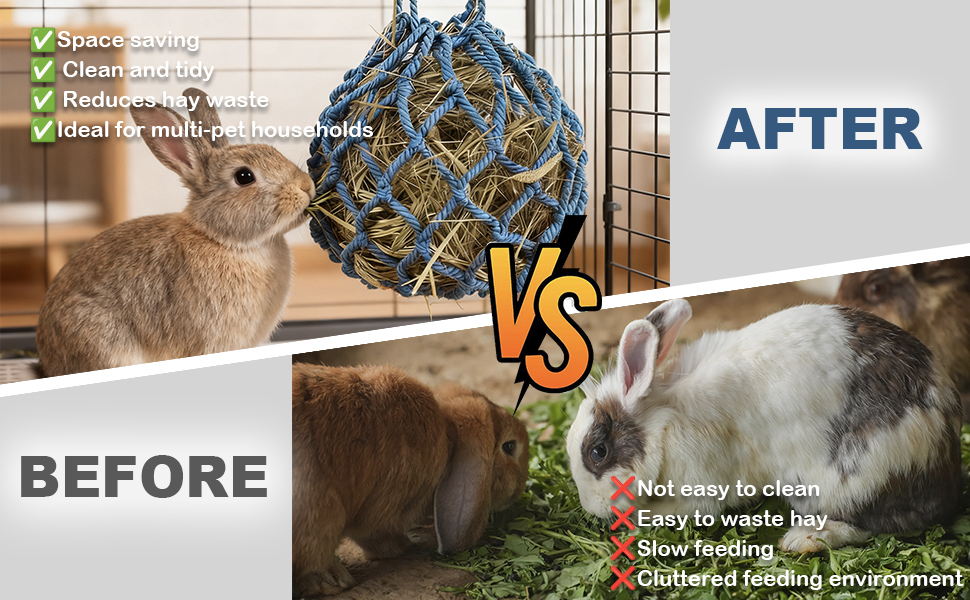
Hay bags are usually made of fabric (often canvas or fleece) or mesh, with an opening at the top for filling and holes or a large mouth for the pig to pull hay through. They hang from cage bars or sit in a corner. Their appeal is largely practical:
- Less mess outside the cage. Fabric bags tend to keep hay contained better than open racks, which is a plus if you keep the cage in a living area.
- Flexible capacity. Many bags hold a lot and compress hay, so a full bag can last a while.
- Soft edges. There are no rigid wire ends to worry about, though fabric can be chewed.
- Portability. Bags are easy to take down, empty, and wash.
The trade-offs matter too. Fabric bags can be gnawed, and once a hole starts, it grows. Hay can get compressed into a dense clump that is hard for a pig to pull apart, especially in bags with small openings. Some pigs also seem to prefer pulling hay from a bag while lying down, which can mean more hay ends up on the floor anyway. Fabric holds odors and needs regular washing, and mesh bags can be harder to clean thoroughly.
Side-by-Side Comparison
| Aspect | Hay Rack | Hay Bag |
|---|---|---|
| Ease of access for the pig | Good if openings are wide enough; can be awkward in tight designs | Depends on opening size; compressed hay can be hard to pull |
| Mess containment | Moderate; hay can fall through openings | Generally better, especially fabric bags |
| Durability | Usually high (metal and sturdy plastic) | Lower; fabric can be chewed and worn |
| Cleaning | Wipe or rinse; quick | Needs washing; fabric retains odors |
| Capacity | Often large | Often large, sometimes more |
| Safety considerations | Watch for sharp wire, head-sized gaps | Watch for chewing and loose threads |
| Cost | Varies widely; often inexpensive | Varies; fabric versions can cost more |
Safety and Health Points to Check
Whatever you choose, the priority is that hay is easy to reach and safe to use. A few practical checks:
- Opening size. The pig should be able to pull out a full strand without scraping its face, but the opening should not be large enough for a head or leg to become trapped.
- No sharp edges. Run a hand along wire ends and cut plastic edges before hanging anything.
- Stable mounting. A rack or bag that swings or falls can startle a pig and discourage eating.
- Chew risk. Fabric bags should be checked regularly for holes, loose threads, and stuffing. Ingested fabric or thread is a serious hazard.
- Hay quality. Whichever holder you use, offer fresh, dry, dust-free hay and remove soiled hay regularly. A holder does not replace daily inspection.
Practical Tips for Either Option
- Place the holder near a resting spot so the pig can eat while lying down, which many guinea pigs enjoy.
- Put a tray or mat underneath to catch fallen hay and make cleanup easier.
- Fill loosely rather than packing hay tightly, so it stays easy to pull.
- Keep a second holder or refill hay daily; guinea pigs eat a lot of hay and benefit from constant access.
- If your pig ignores a new holder, try a different opening size or position before assuming the pig dislikes hay.
Which Is Better?
There is no universal winner. Hay racks are generally the more durable, low-maintenance choice and work well for pigs that eat enthusiastically from a fixed feeder. Hay bags are better at containing mess and can suit households where hay scatter is a real annoyance, but they require more checking for wear and more washing. Many owners find a combination works well: a rack for the main supply and a bag for a secondary spot, or a rack in the cage and a bag for travel.
If you are choosing one, consider your pig’s eating style first, then weigh mess and cleaning effort against durability. A holder that the pig actually uses and that stays clean and safe will always outperform one that looks tidier but makes eating difficult. Since products and materials change, confirm current design and safety details with the seller before purchase.