In this guide
Understanding the Two Tools
If you have kept a fish tank for more than a few weeks, you have probably heard the terms “gravel vacuum” and “siphon hose” used almost interchangeably. They are closely related, and in many aquarium kits the two ideas are bundled into a single product. Still, there is a practical difference worth understanding before you buy equipment or plan your maintenance routine.
A siphon hose is the basic mechanism: a length of flexible tubing that uses gravity to pull water out of the tank and into a bucket. A gravel vacuum is a specialized attachment—usually a wider rigid tube with a nozzle or cleaning head—that fits onto the siphon hose so you can stir up and remove debris trapped in the substrate while the water drains. In short, the siphon is the engine, and the gravel vacuum is the tool that makes the engine useful for cleaning the bottom of the tank.
This article explains how each works, where they overlap, and how to decide which setup fits your aquarium. Because product designs and aquarium practices evolve, treat specific recommendations as general guidance and check current manufacturer instructions for any equipment you buy.
How a Siphon Hose Works
A siphon hose relies on a simple principle: water flows from a higher level to a lower level when a continuous path exists between them. You start the flow—traditionally by sucking on the hose (not recommended for safety and hygiene reasons) or, more commonly, by using a primer bulb, a self-priming valve, or by filling the hose with water before submerging one end. Once water is moving, gravity keeps it flowing as long as the outlet stays below the tank water level.
Bare siphon hose setups are inexpensive and versatile. A length of tubing can be used for water changes, draining a quarantine tank, or moving water between containers. Some hobbyists keep a dedicated hose for aquarium use only, since household hoses and buckets can carry residues that are harmful to fish.
The limitation is that a plain hose does little to clean the substrate. If you push the open end into gravel, you will mostly suck up gravel and water together, and the gravel may end up in your bucket. That is exactly the problem the gravel vacuum attachment solves.
How a Gravel Vacuum Works
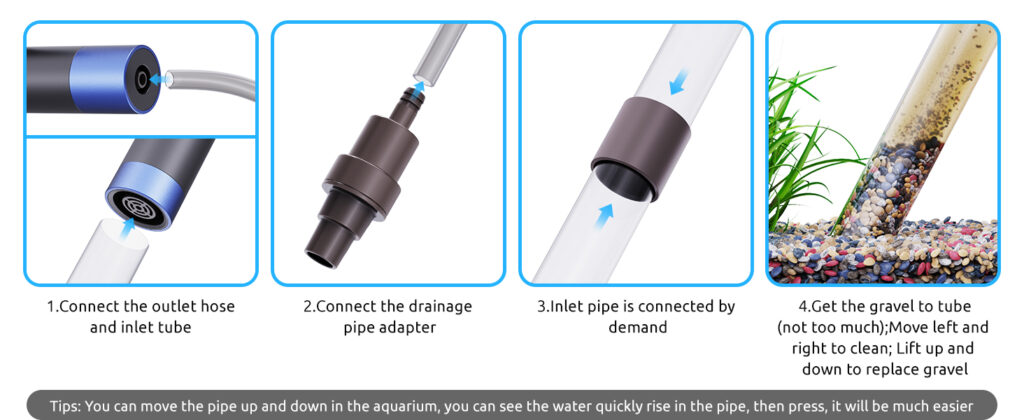
A gravel vacuum is essentially a siphon hose with a wide, rigid cleaning head attached to the intake end. The wider head slows the water velocity at the intake, which allows lightweight debris—fish waste, uneaten food, plant matter—to be lifted while heavier gravel falls back down. Many models include a self-priming bulb, a flow-control clamp, and sometimes a screen or grate inside the head to prevent gravel from being drawn into the hose.
To use one, you typically press the cleaning head gently into the gravel and watch the debris rise through the clear tube. When you see gravel starting to climb toward the top of the head, you lift the head slightly or pinch the flow, letting the gravel tumble back down. Working section by section across the tank floor lets you remove accumulated waste without stripping the substrate completely.
Gravel vacuums come in several forms: small units for nano tanks, larger heads for deep substrates, and battery-powered or electric models that pump water rather than relying on gravity. Each has trade-offs in cost, flow rate, and ease of use.
Key Differences at a Glance
The table below summarizes the practical distinctions. Actual performance depends on tank size, substrate type, hose diameter, and the height difference between the tank and the drain point.
| Feature | Siphon Hose | Gravel Vacuum |
|---|---|---|
| Primary purpose | Draining and transferring water | Cleaning substrate while draining water |
| Substrate cleaning | Limited; risks sucking up gravel | Designed for it; debris lifts, gravel falls back |
| Typical cost | Low | Low to moderate, depending on features |
| Components | Tubing, sometimes a primer | Tubing plus rigid cleaning head, often a primer bulb and flow clamp |
| Best for | Water changes, bare-bottom tanks, general transfers | Gravel or sand substrates in established tanks |
| Ease of use | Simple but less controlled at the intake | More control, more parts to manage |
One point that trips up beginners: a gravel vacuum is not a separate water-moving system. It still depends on siphon action (or a built-in pump). So when someone says “gravel vacuum versus siphon hose,” they are often really comparing a complete cleaning kit against a plain length of tubing.
Which Should You Choose?
For most freshwater tanks with gravel or sand, a gravel vacuum attachment on a siphon hose is the more practical choice. It lets you combine two chores—water change and substrate cleaning—into one pass, which saves time and reduces stress on the fish. If you already own a siphon hose, you can often buy a cleaning head separately and attach it, provided the diameters match.
A plain siphon hose still has a place. Bare-bottom tanks, breeding tanks, and quarantine setups often do not need substrate cleaning, and a simple hose is easier to store and sanitize. It is also handy as a backup or for tasks like draining a bucket or refilling a tank from a prepared container.
Consider these practical factors when deciding:
- Substrate type: Fine sand needs a gentle approach and a vacuum head with adjustable flow; coarse gravel tolerates stronger suction.
- Tank size and height: Larger tanks need a longer hose and enough height difference to maintain flow. A bucket placed on the floor usually provides adequate drop, but very deep tanks may benefit from a pump-assisted model.
- Flow control: A clamp or valve on the hose is genuinely useful. It lets you slow the flow over sand and speed it up over gravel.
- Priming method: A primer bulb or self-priming valve is safer and more convenient than mouth-starting a siphon.
- Maintenance: Vacuum heads with screens need occasional cleaning. Check that replacement parts are available.
If you are starting from scratch, a self-priming gravel vacuum kit with a flow clamp covers the widest range of routine maintenance tasks. If your tank has no substrate, a basic siphon hose with a priming bulb is sufficient and less fussy.
Using Either Tool Safely and Effectively
Whichever you choose, a few habits make the job easier and safer for your fish. First, unplug heaters and filters before draining water so they do not run dry or overheat. Second, keep the drain bucket lower than the tank—gravity does the work, and a bigger height difference means faster flow. Third, watch the water level and stop before you remove more than you intend; many hobbyists change roughly a quarter to a third of the water at a time, but the right amount depends on stocking, filtration, and test results.
When vacuuming, work slowly and avoid digging deep into the substrate, especially in planted tanks where roots and beneficial bacteria live. In tanks with sand, keep the head slightly above the surface and let debris lift rather than plunging in. Rinse and dry equipment after use, and store hoses coiled and off the floor to avoid picking up dust or chemical residue.
Finally, remember that equipment details change. Hose diameters, primer designs, and pump options vary between brands and model years, so confirm compatibility before mixing and matching parts, and follow the manufacturer’s current instructions for anything involving electricity or water flow.
The Bottom Line
The difference between a gravel vacuum and a siphon hose is mostly about purpose and attachment. The siphon hose moves water; the gravel vacuum head turns that water movement into a targeted cleaning tool for the tank floor. For most community aquariums with substrate, a gravel vacuum fitted to a siphon hose is the most efficient all-in-one choice. For bare tanks or simple water transfers, a plain siphon hose does the job with less equipment to manage. Understanding both helps you buy the right gear and get more out of your regular maintenance routine.