In this guide
Best Puzzle Dog Toys for Beginner Problem Solvers
Puzzle toys are an excellent way to keep your dog mentally engaged, reduce boredom, and tap into their natural problem-solving instincts. However, not all dogs are ready for a complex 10-step puzzle right out of the box. If your dog is new to enrichment toys, choosing a beginner-level puzzle is crucial for building confidence and preventing frustration. This guide breaks down what to look for, the main types of toys available, and how to introduce them effectively—so your four-legged friend can start their puzzle journey on the right paw.
Why Start Your Dog with Beginner Puzzle Toys?
Jumping straight into an advanced puzzle can be overwhelming for a novice dog. A puzzle that is too difficult may cause your dog to lose interest, or worse, lead to frustration and chewing on the toy out of aggression rather than thinking. Beginner puzzle toys are designed with simplicity in mind: a single, obvious mechanism that reveals a treat after a small amount of effort. These toys build a foundation of success. Each time your dog solves a simple puzzle, they learn that using their nose, paws, or mouth in a certain way pays off. Over time, that positive reinforcement encourages them to tackle more complex challenges.
Moreover, beginning with easier puzzles helps you observe your dog’s learning style. Some dogs are natural “nudgers,” while others prefer to use their mouths. Understanding their preferences allows you to select future toys that match their strengths. Beginning at this level also makes puzzle play a shared activity—you can celebrate each small win together, strengthening your bond.
What to Look for in a Beginner Puzzle Toy
When browsing for your first puzzle toy, keep these essential criteria in mind. Not all toys labeled “beginner” are equal, so check for the following features:
- Visible treats: The treat should be partially visible or placed in an obvious, shallow slot. Your dog should be able to see the reward, which motivates them to interact.
- Simple mechanism: Look for toys that require one basic action—sliding a single piece, flipping a single lid, or rolling a ball. Avoid toys with multiple stages or rotating compartments.
- Stable base: A good beginner toy should have a rubber base or non-slip feet. If the toy slides around easily, your dog might get distracted or push it into a corner without solving it.
- Safe materials: Since your dog will be using their nose and paws, ensure the toy is made from BPA-free, food-safe materials. It should withstand moderate chewing, but note that most puzzle toys are not intended for aggressive chewers.
- Adjustable difficulty: Some toys allow you to close certain compartments or add slider blockers. This feature is great because it lets you gradually increase challenge without buying a new toy immediately.
Remember that details such as exact materials, colors, and production dates can vary between batches. Always read the manufacturer’s current instructions and check for any updates on sizing or care.
Types of Beginner Puzzle Toys You Can Try
The market offers a wide variety of beginner-friendly designs. Here is a breakdown of the most common types, along with the typical skill they challenge.
| Toy Type | How It Works | Best For | Difficulty Level |
|---|---|---|---|
| Snuffle Mats | Treats are hidden in a fabric “lawn” of fleece strips. Dogs use their nose to sniff out the treats. | Dogs who love to sniff or need a calm, low-impact activity. | Very Easy |
| Treat-Dispensing Balls | A toy with holes where treats fall out as the ball rolls. Some have adjustable openings. | Active dogs who need to burn energy while eating. | Easy |
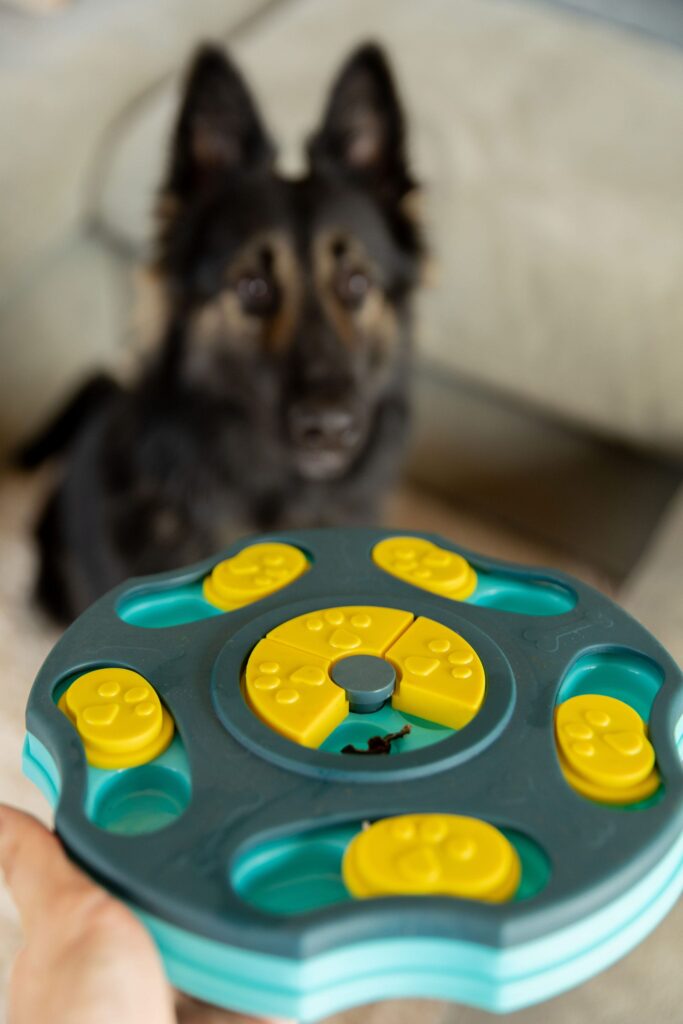
| Sliding Tile Puzzles | A tray with one or two sliding blocks that cover a treat well. The dog shifts the block to access the reward. | Paw and nose users who enjoy lateral thinking. | Easy to Moderate |
| Flip-Lid Puzzles | Treat-filled wells with a hinged lid or flap that opens with a nudge or a paw swipe. | Dogs who are natural nudgers or already use their paws on objects. | Easy |
| Simple Push-and-Roll Toys | A cylindrical toy with treats on the ends that must be pushed over to reveal a opening. | Dogs who like to push things with their nose. | Very Easy |
When choosing among these, consider your dog’s natural preferences. If your dog leads with their nose, a snuffle mat is a perfect first step. If they love to bat things around, a sliding tile toy might be a hit. It’s also wise to choose one toy at a time—introducing multiple puzzles at once can clutter your dog’s focus.
How to Introduce a Puzzle Toy to Your Dog
The way you present the puzzle is just as important as the puzzle itself. A poor introduction can turn your dog off the activity forever. Follow these steps to set your pup up for success:
- Start with high-value treats: Use something extra tasty, like small pieces of chicken, cheese, or a soft training treat. Dry kibble may not be motivating enough for the initial session.
- Show the treat first: Place a few treats on top of the toy and let your dog eat them. This familiarizes them with the surface and creates a positive association.
- Hide a treat partially: Place a treat in the open compartment, but leave the flap slightly ajar or the slider slightly open. Let your dog easily retrieve it.
- Let them succeed with full closure: Now, close the compartment completely (or slide the piece fully over). Demonstrate the action once yourself, but don’t force your dog. If they seem stuck, gently nudge the slider or lid halfway open to help them.
- Praise and reward: When your dog solves it, offer enthusiastic praise and maybe an extra treat from your hand. This completes the positive loop.
Keep the first few sessions short—5 to 10 minutes maximum. If your dog walks away, that’s okay. End the session by putting the toy away. Never hold your dog’s head down or force them to interact, as that can create anxiety.
Safety, Supervision, and Troubleshooting
Even with beginner toys, supervision is essential. Dogs can be surprisingly effective at breaking plastic or pulling fabric apart if they get frustrated. Here are a few things to keep in mind:
- Pick up the toy after use: Don’t leave puzzle toys lying around for free-access chewing. This preserves the toy’s novelty and prevents destructive behavior if the dog becomes bored.
- Watch for chewing: If you notice your dog trying to gnaw through the plastic flaps rather than slide them, remove the toy. They may not be ready for that puzzle type, or the difficulty is too high.
- Clean regularly: Puzzle toys can get slobbery and dirty. Wash them according to the manufacturer’s instructions—most are top-rack dishwasher safe, but always verify the current product care guide, as materials can change.
- Know the size limits: Some puzzle toys have small pieces that could be a choking hazard for very large dogs. Always check the recommended breed size for the specific product you’re considering.
Also, remember that puzzle toys are not a substitute for physical exercise. They are excellent for mental stimulation, but your dog still needs regular walks and playtime. Use puzzles in moderation—a few times a week is plenty for most beginners to keep the activity fresh and exciting.
Taking the Next Step After Mastering Beginners
Once your dog confidently solves a simple puzzle in under a minute, it’s time to think about progression. You have two options: you can purchase a slightly more complex puzzle with multiple compartments, or you can add difficulty to the one you already own. Many beginner puzzles come with adjustable closures—for example, you might be able to block a slider to require two steps, or you might place heavier treats inside to encourage more effort. Alternatively, you can simply move to a puzzle with two or three sliding tiles, where the dog must open two different wells to get all the treats.
Another progression technique is to place the puzzle on an uneven surface (like a soft mat) to make it slightly more challenging. Or you can try hiding the puzzle itself under a light blanket, so the dog must uncover it first. These small modifications keep the toy novel and push your dog’s troubleshooting skills a little further without overwhelming them.
As you advance, keep the same principles in mind: supervise, keep sessions positive, and always ensure the toy is appropriately sized and in good condition. With patience, your beginning problem solver will soon be a puzzle-obsessed genius ready for intermediate and even advanced challenges. Enjoy the process—the look of pure delight when your dog figures out their first puzzle is well worth the effort.