Air Purifier Maintenance for Pet Owners: Cleaning and Filter Care
If you share your home with dogs or cats, an air purifier can help with airborne dander, hair, and the smells that come along with them. But an air purifier only does its job when it gets the right maintenance. In a pet household, filters can load up faster than average, and a clogged filter can stop trapping pollutants effectively, allowing dust, pet dander, and allergens to circulate indoors again [2].
This guide covers the practical side of air purifier maintenance for pet owners: how often to clean, what you should and shouldn’t wash, and how to make your filter last longer.
Why Pet Owners Need a Maintenance Routine
Pet-related allergens and odors come from multiple sources. Regular grooming, frequent cleaning, proper ventilation, and air purifiers can all be part of managing those allergens [3]. An air purifier’s job is to filter particles that pass through the unit, but it won’t remove pet hair or dander that has already settled on carpets, furniture, or floors [4]. That is why regular vacuuming and dusting remain important even while running a purifier.
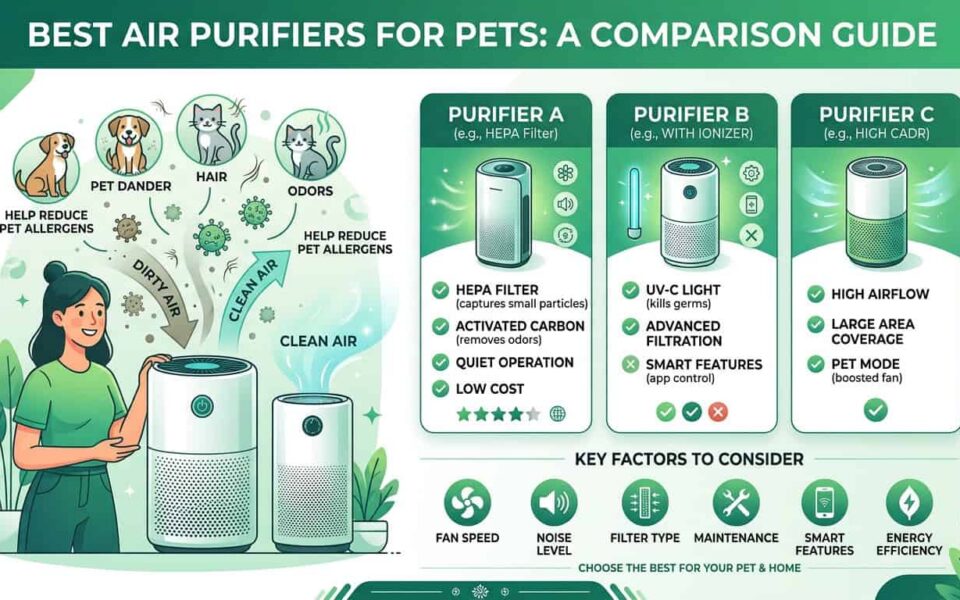
Most three-stage air purifiers used in pet households work like this:
– A pre-filter captures larger particles such as pet hair and fur before they reach the main filter. Its key job is to keep fur from clogging the deeper filters. Some pre-filters are removable and washable, making it easier to rinse away shed fur [1].
– An activated carbon filter clears the air of unwanted pet odors. The carbon absorbs odors and volatile organic compounds (VOCs) as they pass through [1].
– A main particle filter captures small airborne particles like pet dander, dust, and pollen. These filters are made of pleated sheets with randomly assorted fibers designed to trap the smallest particles [1].
When a filter gets clogged, three things happen: the purifier can no longer trap pollutants effectively, the motor has to work harder and consume more electricity, and untreated air can exacerbate asthma, allergies, and other respiratory conditions [2]. In other words, cleaning and replacing filters isn’t just about performance—it’s about your health.
The Core Maintenance Schedule for Pet Households
There is no single universal maintenance schedule that fits every machine. Pet homes with shedding animals, multiple pets, or high traffic will require more frequent care than a home without pets. Still, some general guidelines are useful.
Inspect Filters Monthly
Start by checking the filter once a month for visible signs of dirt or clogging [2]. In a pet household, the pre-filter is the first place you’ll notice hair buildup. A monthly glance is a quick habit that helps you catch problems before they affect airflow.
Clean or Vacuum Pre-Filters Every 1–3 Months
For purifiers with pre-filters, vacuuming them regularly helps improve airflow and extends the life of the main filter [2]. Some manufacturers recommend cleaning or vacuuming pre-filters every 1–3 months and replacing them as needed [2]. If your pre-filter is washable, you may be able to rinse it instead of vacuuming it [1]. Always start by checking the product manual to confirm which parts are actually cleanable [6].
Suggested read: Can Air Purifiers Help With Pet Shedding?
Wash Washable Filters Every 1–2 Months
Some air purifiers use washable filters that are reusable and eco-friendly alternatives to traditional disposable filters. For those types, the recommended maintenance is to wash and dry the filters every 1–2 months to maintain optimal filtration [2]. This applies only when the manufacturer explicitly says the filter is washable. Do not assume a main filter or activated carbon filter is washable just because the pre-filter is.
Plan For Filter Replacement: Every 6–12 Months, But Check Your Model
Most air purifier filter replacements are needed every 6–12 months, depending on usage and indoor air quality [6]. Homes with pets, smoke, or higher pollution levels may require more frequent changes [6].
However, the replacement interval can vary widely by design. Some purifiers are listed with a filter lifespan of 12–15 months, and others with a filter lifespan of five years, depending on the type and amount of filter media [1]. A model with a large 15 lb activated carbon and zeolite mix gas filter may last far longer than a model using a smaller 400 g pelleted activated carbon filter [1]. That doesn’t mean one is better—just that their maintenance schedules are different.
The best approach is to follow your air purifier’s Check Filter Indicator or manufacturer guidelines to maintain consistent performance [6]. At the same time, keep checking monthly because a visual inspection can reveal odor or fur buildup before an indicator does.
How to Clean an Air Purifier Filter Without Damaging It
If you’re not sure how to clean a filter, start by checking your product manual to confirm which parts can be cleaned. Typically, only the pre-filter can be cleaned. The main filter and activated carbon filter should not be washed, because washing can damage their structure and reduce effectiveness [6].
Here is a safe routine that works for most household purifiers:
Clean the Exterior Regularly
Cleaning the outside of the air purifier with a wet cloth and light soap helps keep dust and particles from accumulating inside, preserving airflow pressure and functionality [5]. Wipe the unit down when you do your monthly filter check. Make sure the device is unplugged before wiping.
Vacuum the Pre-Filter
Gently vacuum the pre-filter to remove dust and debris [6]. For hair-heavy households, a vacuum brush attachment may help lift embedded fur without pushing it further into the filter. Vacuuming the pre-filter regularly also helps extend the lifespan of the main filter [2].
If Your Pre-Filter Is Washable, Rinse and Dry Completely
Some pre-filters are washable, making them easy to maintain and cost-effective over time. If your manual says the pre-filter can be rinsed, use water and allow it to dry completely before reinserting it [2]. A wet filter can restrict airflow or lead to mold growth, so never rush this step.
Do Not Wash the Main Filter or Carbon Filter
This point is important. Even if a washable filter is advertised for a particular model, the main particle filter and activated carbon filter should typically not be washed. Washing can damage their structure and reduce effectiveness [6]. For those filters, replacement is usually the proper step, not washing.
Suggested read: What Size Air Purifier Do I Need for Pet Owners?
Keep Spare Filters on Hand
Having spare filters on hand ensures you can replace them promptly [2]. Because replacement intervals can be unpredictable in pet homes, a backup filter can save you from running a dirty purifier while you wait for a replacement to ship.
Reconcile Washable vs. Non-Washable Differences
You may see advice that says “wash washable filters” alongside advice that says “never wash the main filter.” These aren’t actually in conflict. The difference is the filter type. Some manufacturers expressly label certain filters as washable, such as some TPA filters, while other filters are not meant for water or wet cleaning [2][6]. The safest rule is to check your product manual before washing any part of the purifier. If a filter is labeled washable, follow the manufacturer’s wash and dry instructions. If it isn’t, stick to vacuuming the pre-filter and replace the rest on schedule.
Pet-Specific Habits That Extend Filter Life
Your air purifier will perform better if you reduce the amount of hair, dander, and odor it has to handle. These source-control habits don’t replace filter maintenance, but they make it easier on the unit.
Groom and Bathe Pets Regularly
Concerning pet owners, focusing on how often you bathe and brush pets can significantly reduce allergens and fur in the house, which makes the air purifier’s job easier [5]. Regular grooming isn’t only for your pet’s comfort—it helps keep airborne particles from reaching the filter in the first place.
Keep Pet Areas Clean
Pay extra attention to litter boxes, crates, pet beds, feeding areas, pet toys, and favorite sleeping spots [4]. Clean litter boxes regularly and wash food and water bowls as needed. Wash crates, mats, and other pet items according to their care instructions. The cleaner these areas stay, the less hair, dust, and odor can build up and spread throughout the home [4].
Wash Pet Bedding Frequently
Pet bedding can collect significant amounts of hair, dander, dust, and odors. Wash bedding, blankets, and removable covers regularly according to their care instructions [4]. This is one of the easiest ways to reduce the load on your purifier.
Vacuum Upholstery and Rugs
Carpets, rugs, and upholstered furniture can trap pet hair and dander. Vacuum these areas regularly, especially where your pet spends most of its time [4]. Don’t forget pet beds and other fabric surfaces. An air purifier cannot remove hair that is already settled on a rug or sofa.
Positioning Matters for Pet Households
Air purifiers should be placed where your pets spend the most time, such as near beds or sitting rooms, to eliminate maximum allergens and pollutants [5]. Another option is to keep the air purifier near the source, such as litter boxes and pet beds [5]. Make sure the unit isn’t blocked by furniture, and keep the intake and outlet clear so airflow is maintained. Good positioning combined with regular cleaning gives the filter the best chance to capture pet-related pollutants before they spread.
Practical Limitations Worth Knowing
An air purifier only filters particles that pass through the unit. It won’t remove pet hair or dander that has already settled on surfaces [4]. That means you need both: a well-maintained purifier and a home cleaning routine. If you rely only on the purifier, you’ll still see fur on the floor and dander on furniture.
Also, not every purifier is sized correctly for a pet household. Using an undersized unit is a common mistake cited in air quality advice for pet owners [4]. A purifier that’s too small for the room will struggle to keep up with dander and odors, which can increase the load on the filter and shorten its life. If you’re choosing a purifier for a pet home, verify the manufacturer’s recommended room size against your actual room dimensions.
Suggested read: Why Your Pet's Equipment Is Failing and What Nobody Tells You About Spare Parts
Final Maintenance Checklist for Pet Owners
– Check filters monthly for visible dirt or clogging [2].
– Vacuum or clean pre-filters every 1–3 months [2].
– Wash and dry washable filters every 1–2 months, only if your manual says they’re washable [2].
– Replace the main filter and activated carbon filter according to the manufacturer’s recommended schedule, usually every 6–12 months or as indicated by the model [1][6].
– Clean the exterior with a wet cloth and light soap to keep dust from accumulating inside [5].
– Keep spare filters on hand so you can replace them promptly [2].
– Groom and bathe pets regularly, wash pet bedding, and vacuum upholstery and rugs [4][5].
– Place the purifier where your pets spend the most time or near odor sources like litter boxes [5].
– Never skip regular cleaning and dusting—an air purifier is not a substitute for source control [4].
Before any purchase or filter replacement, verify the current manufacturer or retailer listing for your specific model. Filter lifespans, washability, and replacement part availability can change by model year and region. The product manual is always the first place to look, and the Check Filter Indicator is your best day-to-day guide [6].
Sources
1. The best air purifiers for pets (allergies, odors and hair)\n https://housefresh.com/air-purifiers-for-pets
2. How Often Should I Change My Air Purifier Filter? | Airdog USA\n https://airdogusa.com/blogs/articles/how-often-should-i-change-my-air-purifier-filter
3. Top Essential Air Quality Tips for Pet Owners\n https://www.rabbitair.com/blogs/air-purifier/top-essential-air-quality-tips-for-pet-owners
4. Indoor Air Quality Tips for Pet Owners: 8 Easy Tips | Columbus\n https://summersphc.com/columbus/indoor-air-quality-tips-pet-owners
5. Air Purifiers: Enhancing Living Quality In Pet-Inclusive Homes | IQAir USA\n https://www.iqair.com/newsroom/air-purifiers-enhancing-living-quality-in-pet-inclusive-homes
6. Air Purifier Filters Guide: Types, Lifespan & Maintenance – Levoit\n https://levoit.com/blogs/levoit-blog/air-purifier-filters-101